Cardiac Output
L/min
~5 to 20-25 L/min
Relative magnitude
Clinical Guides | Reference Library | Exercise Physiology
Clinical reference materials, downloadable guides, and a CPET terminology glossary for clinicians
Curated by Dr. Chaudhry from peer-reviewed literature and clinical practice
Protocol and interpretation resources for clinicians and lab staff
Best Practices Guidelines to obtain optimal results including equipment, calibration, patient instructions and data submission requirements for sending cases to CPET-Insight
Comprehensive reference listing all directly measured and algorithmically derived variables included in the CPET-Insight analysis - with units, normal ranges, and clinical significance
Introduction to the CPET-Insight mechanism-based interpretative analysis
Healthy adults | key cardiopulmonary parameters
| Parameter | Change | Clinical detail | Relative magnitude |
|---|---|---|---|
| Cardiac & Oxygen Transport | |||
| Cardiac OutputL/min | ↑ ~5x | ~5 to 20-25 L/min | |
| VO₂L/min | ↑ 10-15x | Largest relative increase among all parameters | |
| VCO₂L/min | ↑ 15-25x | ~0.2 to 3-5 L/min, amplified above AT by bicarbonate buffering | |
| Stroke VolumemL/beat | ↑ ~1.5x | ~70 to 110 mL/beat | |
| O₂ PulsemL/beat | ↑ ~5x | VO₂ / HR ratio | |
| Heart Rate & Blood Pressure | |||
| Heart Ratebeats/min | ↑ ~3x | Primary driver of cardiac output rise | |
| Systolic BPmmHg | ↑ 60-100 | ~60-100 mmHg increase from rest | |
| Diastolic BPmmHg | ↔ No change | No change or slight decrease, <10 mmHg | |
| Gas Exchange & Ventilation | |||
| RERVCO₂/VO₂ | ↑ ~1.4x | 0.75-0.85 at rest, ≥1.10 supports maximal effort | |
| Minute VentilationL/min | ↑ ~20x | 5-10 to 100-200 L/min | |
| Peripheral Extractiona-vO₂ diff | ↑ ~3-4x | 5 to 15-20 mL/100 mL blood | |
Sources: PMC4551211 | British Journal of Sports Medicine 39(4):190 | healthy adults, rest to peak exercise
L/min
~5 to 20-25 L/min
Relative magnitude
L/min
Largest relative increase among all parameters
Relative magnitude
L/min
~0.2 to 3-5 L/min, amplified above AT by bicarbonate buffering
Relative magnitude
mL/beat
~70 to 110 mL/beat
Relative magnitude
mL/beat
VO₂ / HR ratio
Relative magnitude
beats/min
Primary driver of cardiac output rise
Relative magnitude
mmHg
~60-100 mmHg increase from rest
Relative magnitude
mmHg
No change or slight decrease, <10 mmHg
Relative magnitude
VCO₂/VO₂
0.75-0.85 at rest, ≥1.10 supports maximal effort
Relative magnitude
L/min
5-10 to 100-200 L/min
Relative magnitude
a-vO₂ diff
5 to 15-20 mL/100 mL blood
Relative magnitude
Sources: PMC4551211 | British Journal of Sports Medicine 39(4):190 | healthy adults, rest to peak exercise
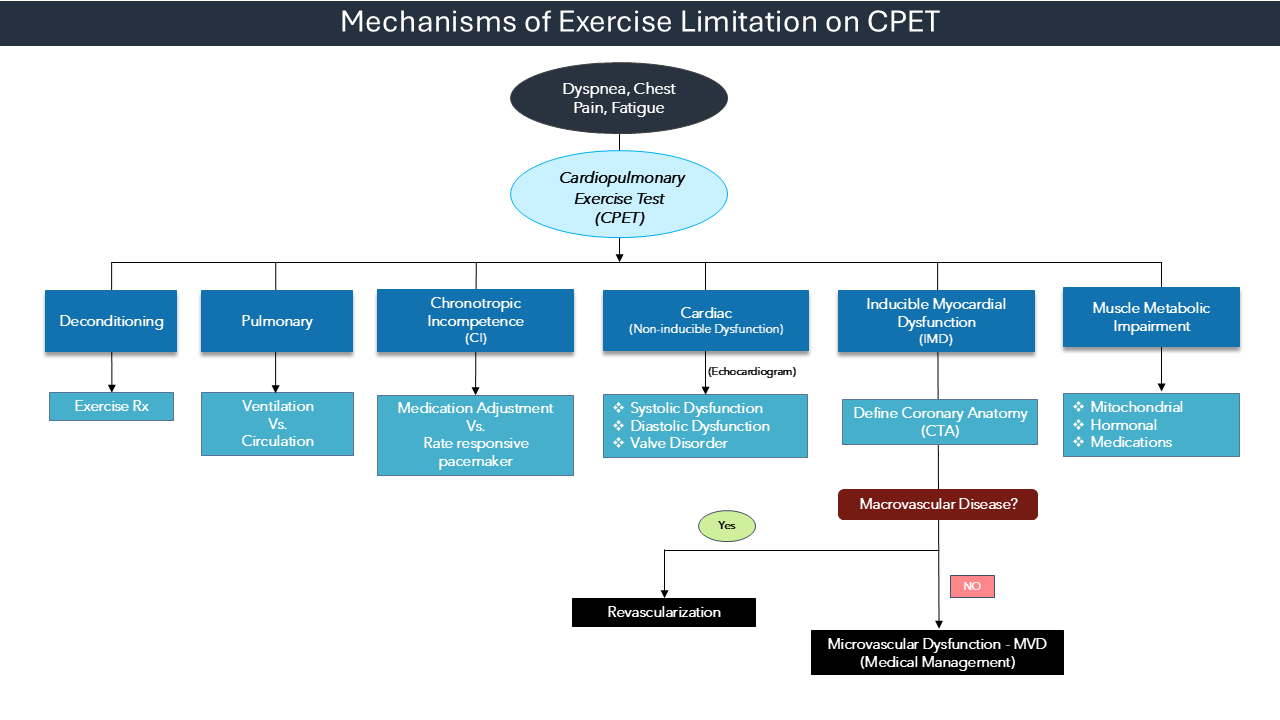
Diagnostic workflow for symptomatic patients, where the mechanism of exercise limitation helps identify the physiologic source of symptoms
See how clinician-reviewed CPET interpretation can support your workflow